Create Algorithm Flowcharts with AI
Describe your algorithm’s logic—loops, conditions, branching, recursion—and AI instantly converts it into a clear algorithm flowchart suitable for teaching, debugging, and documentation.
Try Algorithm Flowchart
AIで図表を即時生成。まずは説明を入力してください。
クイック例:
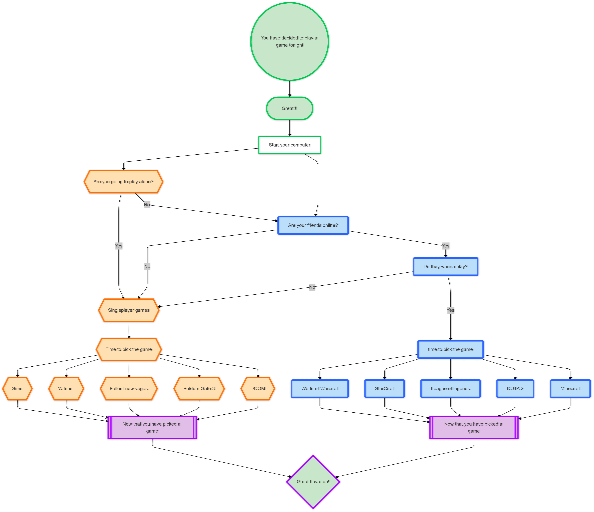
Current selected: FlowChart
図表タイプを選び、説明文を入力してください
Visualize Algorithms in 3 Steps
From pseudocode to structured diagram
Describe Your Algorithm
Explain your logic using natural language, pseudocode, or existing code snippets.
AI Generates the Flowchart
AI converts the logic into a standardized flowchart with correct symbols for decisions, loops, and processes.
Use for Learning or Documentation
Export the flowchart for presentations, textbooks, engineering documents, or code reviews.
登録不要 · クレジットカード不要 · 数秒で無料フローチャート作成
Perfect for Algorithm Visualization
Bring logic and control flow to life
- Loop Structure Visualization
- Clearly display for-loops, while-loops, and recursive call structures.
- Conditional Logic Mapping
- Represent nested if/else, switch cases, and complex branching with clarity.
- Input/Output Highlighting
- Differentiate inputs, outputs, and process steps using standard flowchart symbols.
- Educational Focus
- Ideal for computer science classes, algorithm lectures, and student assignments.
Algorithm Flowchart FAQs
- Can I convert existing code into flowcharts?
Yes. Describe the logic from your code and AI will map it into a readable flowchart.
- How do I represent recursive algorithms?
Include base cases and recursive branches in your description. AI will visualize the recursive flow accurately.
- Can I show nested loops or conditions?
Absolutely. AI handles complex nested structures and keeps the diagram readable.
- Is this suitable for teaching programming?
Yes—algorithm flowcharts help students understand control flow and program behavior visually.
- What programming paradigms can I visualize?
Procedural logic, OOP method flows, functional transformations, asynchronous processes, and more.
関連ユースケース
似たユースケースを探す
Flowchart Maker
Generate clean, editable flowcharts with AI. Describe any process in plain text and instantly turn it into a structured, professional diagram.
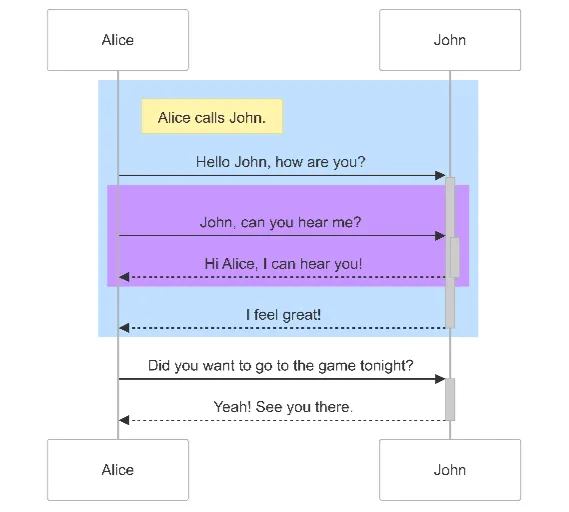
Sequence Diagram Maker
Generate UML sequence diagrams with AI to visualize how components, services, or systems interact over time.
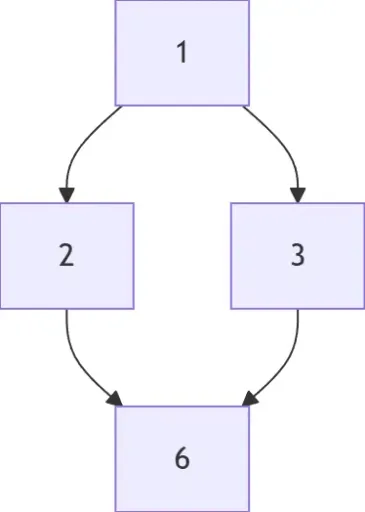
Hasse Diagram Generator
Generate Hasse diagrams from any partially ordered set (poset). Perfect for mathematics, discrete structures, logic, and computer science.