What Is a Subprocess in a Flowchart?
A subprocess in a flowchart—also known as a predefined process or subroutine—is a reusable block that represents a well‑defined set of steps aggregated into a single symbol. Using a flowchart subprocess keeps the main flow simple, makes repeated logic consistent, and helps teams collaborate around clear boundaries.
Quick navigation
- Definition and the symbol
- When to use a subprocess
- How to draw a subprocess (with examples)
- Best practices
- Subprocess vs BPMN subprocess
- Mermaid examples
- FAQ
- References
Definition and the symbol
In classic flowcharts, a subprocess is also called a predefined process or subroutine. The standard subprocess symbol (predefined process symbol) looks like a process box with double vertical edges, meaning the internal steps are defined elsewhere.
Common aliases and terms you’ll see:
- Subprocess in flowchart / Flowchart subprocess
- Predefined Process (standard name)
- Subroutine (software/algorithmic term)
- Reusable Process (practical alias)
How it differs from other blocks:
- vs Process: a normal Process shows an inline step; a Subprocess stands for multiple steps defined elsewhere
- vs Decision: Decision asks a question and branches; Subprocess performs a chunk of work as a unit
Tip for diagramming tools:
- In Mermaid flowcharts, a subroutine is written as
[[Text]](double brackets) to draw the predefined process double‑edged symbol.
When to use a subprocess
Use a flowchart subprocess when it helps you:
- Reuse the same set of steps in multiple places (e.g., "Validate Payment", "Authorize User")
- Hide complexity from the main flow to reduce cognitive load
- Define clear contracts (inputs/outputs, preconditions/postconditions)
- Align team boundaries (hand‑offs between squads/systems/vendors)
- Test, measure, or replace the unit independently (versioning/migration)
When not to use it:
- One-off steps that never repeat
- Very tiny steps where the symbol would create noise
- Highly context-coupled logic that changes every time it’s used
How to draw a subprocess (with examples)
A good subprocess has three parts: a clear name, an explicit input/output contract, and well‑defined failure/exception paths. When documenting a subprocess in a flowchart, make these visible near the predefined process symbol.
Recommended checklist:
- Name: action‑oriented, result‑focused (e.g., "Verify Email Token")
- Inputs/Outputs: annotate near the block or in lane notes
- Failure handling: return codes, exception branches, or retries
- Scope: single responsibility; avoid mixing unrelated concerns
Placement patterns
- Caller → [[Reusable step]] → Next step
- Parallel callers → [[Shared step]] → Merge
- Caller → [[Reusable step]] → Decision → Alternate paths
Best practices
- Keep the main flow readable; move more than ~5–7 inline steps into subprocesses
- Use consistent names (verb + object), and keep tense parallel across the page
- Document preconditions and outputs near the block (or in a legend)
- Prefer standard connectors; avoid cross-page "flying" arrows
- If a subprocess appears more than twice, consider extracting it to its own page
- Use lanes or sections to indicate ownership (team/system) when relevant
Subprocess vs BPMN subprocess
Flowchart subprocess (predefined process):
- Visual: rectangle with double vertical edges (the predefined process symbol)
- Semantics: an opaque, reusable block; details live elsewhere
- Scope: informal rules; no strict event or lane semantics
BPMN subprocess:
- Visual: rounded rectangle often with a plus (+) marker; can be collapsed or expanded
- Semantics: formal behavior including events, boundaries, lanes (swimlanes), and message flows
- When to switch: regulatory workflows, system orchestration, or when events/transactions matter
Mermaid examples
Below are copy-ready Mermaid snippets. If your editor supports Mermaid, paste to render.
1) Main flow that calls two subprocesses
flowchart TD
  A([Start]) --> B[Receive Order]
  B --> [[Validate Customer]]
  [[Validate Customer]] --> C{Items In Stock?}
  C -- Yes --> [[Reserve Inventory]]
  C -- No --> E[Notify Out-of-Stock]
  [[Reserve Inventory]] --> D[Create Shipment]
  D --> F([End])
2) Refactor a long sequence into a subprocess
Before (inline and noisy):
flowchart TD
  S([Start]) --> P1[Parse Token]
  P1 --> P2[Lookup User]
  P2 --> P3[Check Expiry]
  P3 --> P4[Check Revocation]
  P4 --> P5[Set Session]
  P5 --> O([Continue])
After (clean with a reusable subprocess):
flowchart TD
  S([Start]) --> [[Authenticate Session]]
  [[Authenticate Session]] --> O([Continue])
How to implement the subprocess:
flowchart TD
  subgraph Authenticate_Session [Authenticate Session]
    direction TB
    A1[Parse Token]
    A2[Lookup User]
    A3[Check Expiry]
    A4[Check Revocation]
    A5[Set Session]
    A1 --> A2 --> A3 --> A4 --> A5
  end
FAQ
Is a subprocess the same as a function?
They’re analogous. A subprocess is like a function or module in programming: a named unit with inputs and outputs that you can reuse. But a flowchart doesn’t enforce strict type contracts—write them in notes/legends when needed.
Can I nest subprocesses?
Yes. Keep nesting shallow—two levels are usually enough for readability. If you need deeper structures or events, consider BPMN.
How do I show inputs and outputs?
Add small labels near connectors (e.g., "orderId", "session"). For complex contracts, include a margin note or a mini table nearby.
What if my tool doesn’t have a predefined process symbol?
Use a regular process box and annotate it as "Subprocess"; or in Mermaid use [[Text]] which renders the subroutine double-edge style.
References
- Wikipedia: Flowchart — Symbols and conventions
- Mermaid: Flowchart syntax (subroutine
[[text]]) - Lucidchart: Flowchart symbols and notation
- SmartDraw: Flowchart symbols
- BPMN 2.0 specification (subprocess semantics)
If you need a quick starting point, generate the first draft as a Mermaid flowchart and then expand subprocesses as your logic stabilizes. This keeps early iterations fast while preserving clarity for handoff.
Author

Categories
More Posts
Problem-Solving Flowchart: DIY Guide + Free Templates 2026
Learn how to create problem-solving flowcharts with our step-by-step DIY guide. Includes symbols, templates & examples. Try FlowchartAi daily for free!
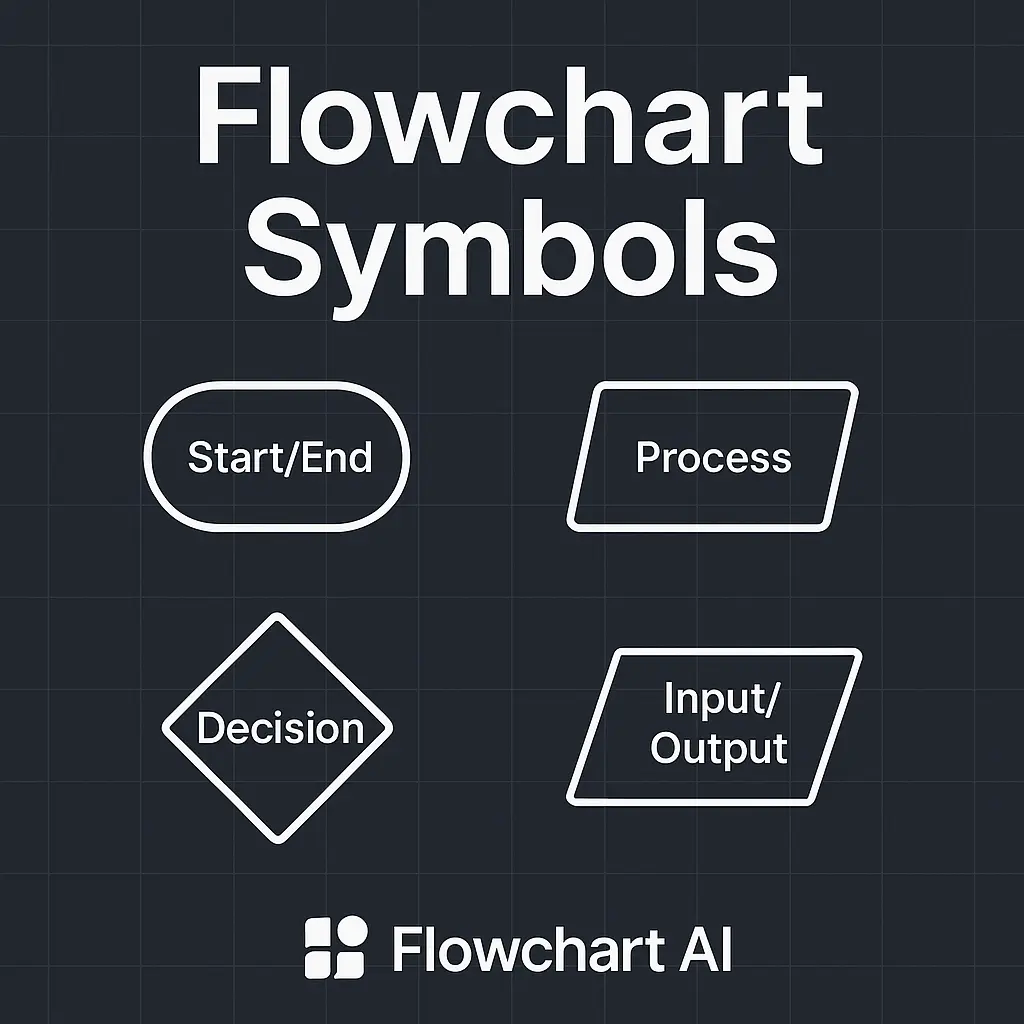
Flowchart Symbols Explained: Complete Guide + Usage Examples
Master flowchart symbols with our comprehensive guide. Learn meanings, correct usage, common mistakes & best practices. Includes real examples, ANSI/ISO standards & tool recommendations. Create clear, professional flowcharts that actually work.
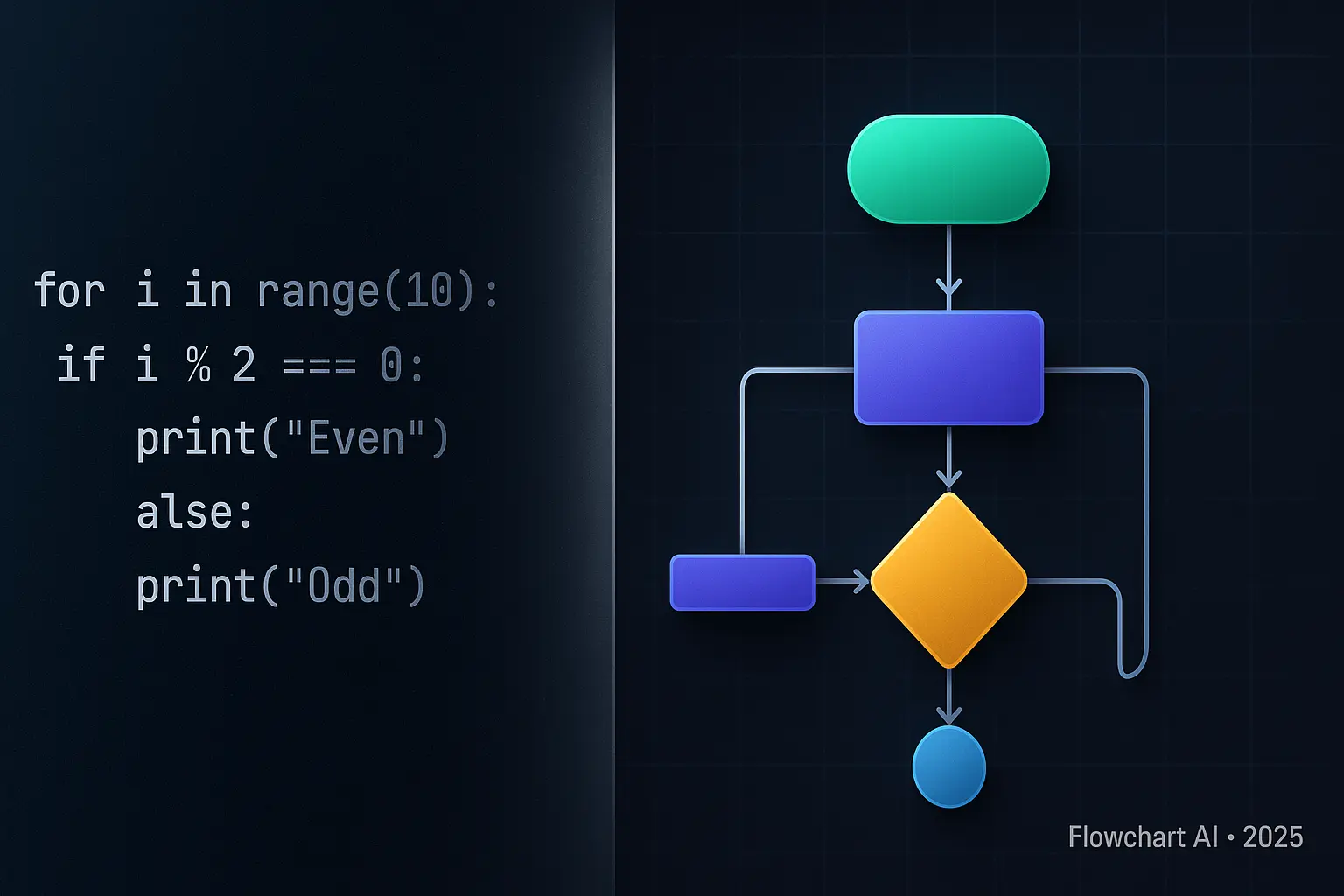
Algorithm and Flowchart: Definitions, Symbols, Examples (2026)
Learn what algorithms and flowcharts are, how they differ, standard flowchart symbols, pseudocode vs flowchart, and step-by-step examples with Mermaid flowcharts.